Balloon in Mouth Warning Symbol Explained | Everts-Pol

What does the “balloon at the mouth” symbol mean?
The “balloon at the mouth” symbol used by Everts-Pol conveys two safety messages: do not inhale helium or any other gas from a balloon, and do not inflate balloons by mouth. The pictogram shows a face with a balloon at the mouth and a prohibition sign. It draws attention to behaviours involving direct contact between the mouth and a balloon, as well as the gas used to fill it. The symbol does not mean that children below a certain age cannot be near inflated balloons. The warning for children under eight is a separate message and primarily concerns the risks associated with uninflated and broken balloons.Why does the pictogram have two meanings?
The symbol on Everts-Pol packaging is designed to provide a simple reminder of two rules:| Meaning of the pictogram | What should you do? |
|---|---|
| Do not inhale gas from a balloon | Do not inhale helium or any other gas used to fill balloons. |
| Do not inflate balloons by mouth | Use the inflation method and equipment specified by the manufacturer. |
Why should you not inhale helium from a balloon?
Helium is chemically inert, but it does not supply the body with oxygen. Deliberately inhaling helium can reduce the amount of oxygen available when breathing and lead to oxygen deprivation. Possible symptoms of oxygen deprivation include:- dizziness,
- confusion,
- weakness,
- loss of consciousness.
Why should you not inflate balloons by mouth?
The second meaning of the Everts-Pol pictogram is the instruction not to inflate balloons by mouth. Direct contact between an uninflated balloon and the mouth increases the risk of accidentally drawing the material into the mouth or airway. A similar risk can arise if a balloon bursts during inflation, producing small pieces of latex. An uninflated balloon or a piece of a broken balloon can enter the airway and make breathing difficult or prevent it altogether. For this reason, balloons should be filled according to the manufacturer’s instructions, using equipment suitable for the specified inflation method. We explain the inflation symbol in more detail in our guide: what does the pump symbol on balloon packaging mean?The “balloon at the mouth” symbol and the warning for children under eight
These are two different messages and should not be treated as interchangeable. The “balloon at the mouth” symbol used by Everts-Pol tells users:- not to inhale helium or any other gas from a balloon,
- not to inflate balloons by mouth.
How does the “balloon at the mouth” symbol differ from the pump symbol?
Both symbols concern safe balloon use, but they serve different purposes.| Symbol | Meaning |
|---|---|
| “Balloon at the mouth” | Do not inhale gas from a balloon or inflate balloons by mouth. |
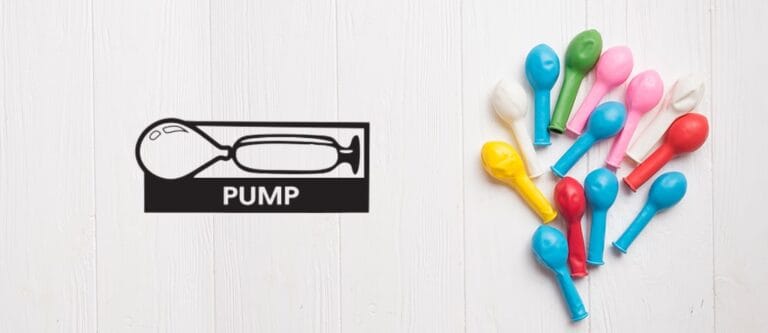
| Pump symbol | Indicates the recommended method of inflating the balloon using suitable equipment. |
Latex balloons and children’s safety
In addition to the meaning of this pictogram, other rules apply when using balloons around children. The most important precautions are to:- keep uninflated balloons out of the reach of young children,
- remove broken balloons and their pieces immediately,
- prevent children from putting uninflated or broken balloons in their mouths,
- provide adult supervision in accordance with the warnings on the packaging.
How to use balloons in accordance with the warnings
Packaging symbols are most useful when they translate into practical rules during decoration preparation or play.- Do not inhale helium or any other gas from a balloon. Do not use helium for voice-changing games.
- Do not inflate balloons by mouth. Use the inflation method specified by the manufacturer.
- Do not allow children to put uninflated or broken balloons in their mouths.
- Children under eight should be supervised by an adult. Keep uninflated balloons out of their reach.
- Remove broken balloons immediately. After the event, collect all remaining pieces as well.
- Read the information on the packaging. Individual symbols may address different aspects of use, including age, inflation, contact with gas or waste disposal.
FAQ – frequently asked questions
What does the “balloon at the mouth” symbol mean?
The pictogram used by Everts-Pol has two meanings: do not inhale helium or any other gas from a balloon, and do not inflate balloons by mouth.
Can inhaling helium from a balloon be dangerous?
Yes. Helium does not supply the body with oxygen, so deliberately inhaling it can lead to oxygen deprivation, dizziness, confusion or loss of consciousness. In severe cases, oxygen deprivation can have serious consequences. Helium should never be deliberately inhaled from a balloon or from the equipment used to fill it.
Why should you not inflate balloons by mouth?
During mouth inflation, an uninflated balloon is positioned directly next to the mouth and airway. The balloon or a piece of it can accidentally be drawn into the mouth or airway. Everts-Pol recommends using the inflation method specified on the packaging.
Does the “balloon at the mouth” symbol mean the same as the warning for children under eight?
No. The “balloon at the mouth” symbol used by Everts-Pol means that users must not inhale gas from a balloon or inflate balloons by mouth. The warning for children under eight primarily concerns the risk of choking or suffocation from an uninflated or broken balloon.
Can children under eight be in an area where balloons are present?
Yes. The warning for children under eight does not mean that balloons are completely prohibited. Children should be supervised by an adult, uninflated balloons should be kept out of their reach, and broken balloons and their pieces should be removed immediately.
Does the “balloon at the mouth” symbol mean that a pump must be used?
One of the symbol’s messages is not to inflate balloons by mouth. Check the product packaging for the recommended inflation method. If a pump symbol is shown, it indicates inflation using suitable equipment.
Is the “balloon at the mouth” symbol the same as the mandatory EN 71-1 warning?
These messages should not be treated as interchangeable. The “balloon at the mouth” pictogram used by Everts-Pol provides additional information about not inhaling gas and not inflating balloons by mouth. The warning for children under eight and the risks associated with uninflated or broken balloons is a separate safety message.