Balloon Manufacturing, Safety and Standards|Blog|Responsible Balloon Use and Environmental Awareness
N-Nitrosamines in Latex Balloons Explained | Everts-Pol
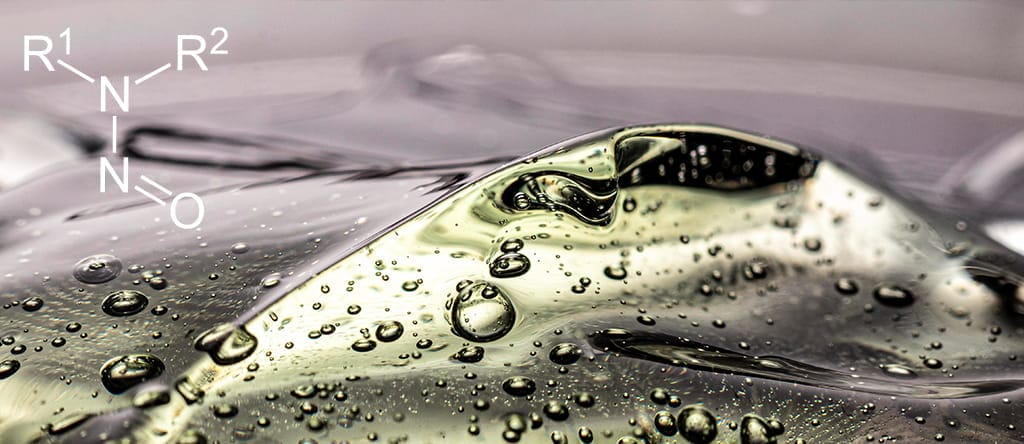
Why are balloons tested for nitrosamines?
For latex balloons, one of the parameters checked is the migration of N-nitrosamines and N-nitrosatable substances. Limit values have been established for these substances, so product compliance is assessed using the results of appropriate laboratory tests. The presence of a quantifiable amount of a substance does not automatically mean that a product is non-compliant. Relevant factors include the result obtained, the scope of testing, the limit of quantification of the method used and the limit value applied in the assessment. As a Polish manufacturer of latex balloons, Everts-Pol uses laboratory testing as one element of its product documentation. This article presents a specific example: testing for the migration of N-nitrosamines and N-nitrosatable substances carried out by SGS Institut Fresenius GmbH.What are N-nitrosamines?
N-nitrosamines are a group of chemical compounds that can form under certain conditions through reactions involving suitable precursors. In rubber manufacturing processes, their formation may be associated with factors such as the vulcanisation system used and the material formulation. The SGS report on the tested balloon sample analysed the following N-nitrosamines, among others:- NDMA – N-nitrosodimethylamine,
- NDEA – N-nitrosodiethylamine,
- NDIPA – N-nitrosodiisopropylamine,
- NDPA – N-nitrosodipropylamine,
- NDiBA – N-nitrosodiisobutylamine,
- NDBA – N-nitrosodibutylamine,
- NPIP – N-nitrosopiperidine,
- NPYR – N-nitrosopyrrolidine,
- NMOR – N-nitrosomorpholine,
- NDBzA – N-nitrosodibenzylamine,
- NDELA – N-nitrosodiethanolamine.
Why have limits been set for nitrosamines?
N-nitrosamines are a diverse group of compounds. Some have been classified as carcinogenic or potentially carcinogenic substances. However, hazard classification alone does not determine the risk associated with a specific level of exposure. For balloons, a particular consideration is the potential migration of substances from the material when the product comes into contact with the mouth. This may occur, for example, when attempting to inflate a balloon by mouth, sucking on its neck or through other direct contact between the balloon and the mouth. For this reason, requirements concerning the migration of N-nitrosamines and N-nitrosatable substances have been established for certain elastomer toys, including balloons.EN 71-12 and limit values for balloons
Requirements concerning N-nitrosamines and N-nitrosatable substances relate both to toy safety legislation and to the EN 71-12:2016 standard. The SGS report on Everts-Pol samples was based on testing carried out according to DIN EN 71-12:2017-03, the German version of EN 71-12:2016. It is important to distinguish between the values specified in the Directive and those stated in the standard itself:| Criterion | N-nitrosamines | N-nitrosatable substances |
|---|---|---|
| EN 71-12:2016 – values stated in the standard | 0.01 mg/kg | 0.1 mg/kg |
| Directive 2009/48/EC – limit values | 0.05 mg/kg | 1.0 mg/kg |
| SGS report no. 6727571 – assessment criteria applied | 0.05 mg/kg | 1.0 mg/kg |
| Result for the tested Everts-Pol sample | 0.002 mg/kg | 0.002 mg/kg |
Does the country of manufacture indicate nitrosamine levels?
No. A product’s country of origin alone does not indicate its level of N-nitrosamine migration. It should not be assumed that a product manufactured in the European Union will automatically achieve a better result, or that an imported balloon will be non-compliant. Assessing a specific product requires appropriate laboratory testing relating to a defined sample, test method and limit values. Rather than assessing a product solely on the basis of its country of manufacture, check its documentation and the scope of the tests performed.What did testing of Everts-Pol balloon samples show?
The Everts-Pol website presents SGS Institut Fresenius GmbH test report no. 6727571, dated 7 February 2024. The sample is described in the report as: “Balloons Mix – Standard, Metallic, Macaron, Chrome”. The testing covered the migration of N-nitrosamines and N-nitrosatable substances and was carried out according to DIN EN 71-12:2017-03. For most of the N-nitrosamines analysed, the results were below the limit of quantification of the method used. For N-nitrosodibenzylamine (NDBzA), a value of 0.002 mg/kg was quantified. The total result for migrating N-nitrosamines was: 0.002 mg/kg. The total result for N-nitrosatable substances was: 0.002 mg/kg. The final assessment stated in the report was: Pass. A Pass result means that the tested sample met the criteria applied in that particular test. It does not mean that the product contains absolutely no N-nitrosamines. The report’s results relate to the sample, testing scope and conditions described in the laboratory report. A single numerical value should not automatically be applied to all products, batches and production periods. We explain the report, the EN 71 standards and the differences between laboratory testing, a declaration of conformity and CE marking in more detail in our article: latex balloons and EN 71 standards – Everts-Pol testing and compliance.Why is a laboratory report important for B2B customers?
For advertising agencies, wholesalers, distributors and other B2B customers, access to documentation allows a more detailed assessment of a product before purchasing it or using it in a project. Instead of basing a decision solely on general descriptions such as “safe” or “certified”, customers can check specific information:- who carried out the testing,
- the report number and date,
- which sample was tested,
- the scope of testing,
- the method used,
- the results obtained,
- the assessment criteria applied.
How to verify nitrosamine testing documentation
Before purchasing a larger batch of balloons or choosing a product for professional use, check a few key elements of its documentation.- Check the laboratory. Identify which organisation carried out the testing.
- Check the report number and date. These allow the document to be clearly identified.
- Check the sample description. The report should state which product or set of samples was tested.
- Check the scope and method. The word “tested” alone does not explain which product properties were assessed.
- Check the results and assessment criteria. A numerical result must be interpreted in relation to the appropriate limit value.
- Check whether the document relates to the product you are buying. A report covering one sample should not automatically be treated as documentation for every product available on the market.
Frequently asked questions
What are nitrosamines in balloons?
N-nitrosamines are a group of chemical compounds that can form under certain conditions, including during processes associated with rubber manufacturing. Some are classified as carcinogenic or potentially carcinogenic substances, which is why migration requirements have been established for balloons.
Does detecting a nitrosamine automatically mean that a balloon is non-compliant?
No. The result must be compared with the appropriate limit value and interpreted with regard to the method used and its limit of quantification. The presence of a quantifiable amount of a substance does not automatically mean that a limit has been exceeded.
What is the limit for N-nitrosamines in balloons?
Legal requirements should be distinguished from the values stated in the standard. For the relevant toys, Directive 2009/48/EC specifies a value of 0.05 mg/kg for N-nitrosamines and 1.0 mg/kg for N-nitrosatable substances. Within the relevant scope, EN 71-12:2016 specifies values of 0.01 mg/kg and 0.1 mg/kg.
What did SGS testing of Everts-Pol balloons show?
SGS report no. 6727571 gave the tested sample mixture a Pass assessment for the migration of N-nitrosamines and N-nitrosatable substances. The total result was 0.002 mg/kg for N-nitrosamines and 0.002 mg/kg for N-nitrosatable substances. These results relate to the sample and testing scope described in the report.
Does a Pass result mean that balloons are completely free from nitrosamines?
No. A Pass result means that the tested sample met the criteria applied in the report. It is not equivalent to an absolute zero result. In SGS report no. 6727571, most of the N-nitrosamines analysed were below the limits of quantification, while N-nitrosodibenzylamine (NDBzA) was quantified at 0.002 mg/kg.
What does “<0.005 mg/kg” mean in a laboratory report?
The “<” sign means that the result is below the stated limit of quantification of the method used. “<0.005 mg/kg” does not mean mathematical zero. It means that the method used in the test did not quantify the substance at a level equal to or greater than 0.005 mg/kg.
Does the country of manufacture determine nitrosamine levels?
No. The country of manufacture alone does not indicate the level of N-nitrosamine migration. An assessment requires the results of appropriate laboratory testing relating to a specific sample and method.