Educational Activities with Latex Balloons
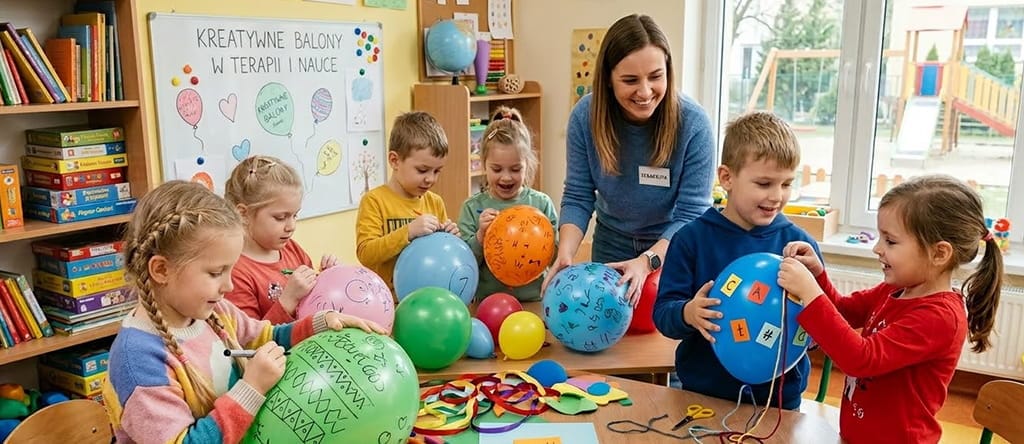
Latex balloons can be used not only as decorations but also as simple props for selected art, language, movement and group activities.
An inflated balloon can be used to make paint prints, create simple models, practise following instructions during language activities or demonstrate selected physical phenomena. However, a balloon itself is not a therapeutic tool with a specific effect. If used in therapy or specialist sessions, its use should reflect the session’s objectives and the judgement of an appropriately qualified professional.
Remember that the outcome of a session depends on how it is planned and delivered, rather than simply on using a balloon.
Balloons in children’s activities – safety guidelines
Before planning balloon activities, consider the participants’ ages and the warnings on the specific product packaging.- An adult should prepare the balloons using a pump.
- Children under 8 should use balloons under adult supervision.
- Keep uninflated balloons out of the reach of young children.
- Immediately collect and remove any broken balloon and all its fragments.
- Children should not put balloons or balloon fragments in their mouths.
- Avoid activities that involve deliberately piercing or bursting balloons when working with children.
- Before the session, take account of any participants’ allergies to natural rubber latex.
Balloons in art activities
An inflated balloon can be used as an alternative tool for applying paint. Instead of using a conventional brush, children can gently dip the balloon’s surface into paint and make prints on paper.Printing patterns with a balloon
This activity requires an inflated balloon, paint suitable for children’s art activities and a large sheet of paper. Varying the pressure, amount of paint and angle at which the balloon touches the paper produces different shapes and patterns. The activity can be combined with exploring:- Colours.
- Shapes.
- Repeating patterns.
- Mixing selected colours.
Characters on balloons
Simple faces or characters can be drawn on inflated balloons and then used as props for storytelling, language games or performances prepared by the group. There is no need to pierce the balloons or fill them with paint. After the session, collect all the balloons used and keep them out of young children’s reach.Balloons in language activities
A balloon can serve as a simple prop for tasks involving naming, describing and following instructions. Examples include:- Naming colours – the participant points to or names the colour of a particular balloon.
- Describing – the child describes the colour, size or character drawn on a balloon.
- Following instructions – for example, “pass the red balloon”, “put the balloon next to the chair” or “lift the balloon up”.
- Building sentences – participants create short sentences about the characters drawn on the balloons.
- Creating stories – several balloon characters can become the main characters in a story invented together.
Group games with balloons
Inflated balloons can also be used for simple group activities. Adapt the rules of each game to the participants’ ages, group size and available space.Keep the balloon in the air
Participants work together to tap an inflated balloon and keep it from touching the floor. The teacher can introduce additional tasks, such as:- Counting consecutive taps.
- Using only a specified hand.
- Changing direction after a set number of taps.
- Following instructions such as “up”, “down”, “right” and “left”.
Balloon tennis
An inflated balloon can be tapped using lightweight bats made, for example, from paper plates and wooden craft sticks. The activity can be carried out individually, in pairs or in small teams.A balloon course
Instead of blowing on a balloon with their mouths, participants can move an inflated balloon along a marked route using a paper fan or a lightweight cardboard paddle. Organise all games in a way that minimises the risk of balloons being deliberately burst or fragments being left in the activity area.Balloon experiments and projects
Simple science experiments and projects are among the most practical educational uses of balloons.A balloon rocket
An inflated balloon can be attached to a straw threaded onto a taut string. When the air is released, the balloon moves along the string. The experiment can provide a starting point for discussing:- Motion.
- Reaction forces.
- The direction in which a force acts.
- How the amount of air affects the experiment.
An air-powered vehicle
Under a teacher’s supervision, older children can build a simple vehicle powered by air escaping from an inflated balloon. The task can be used to compare different wheel designs, vehicle weights and ways of attaching the balloon.A bicarbonate of soda and vinegar reaction
A balloon can also be used in a demonstration of a chemical reaction in which the gas produced gradually inflates it. An adult should prepare and supervise the experiment, adapting it to the participants’ ages. In this experiment, the balloon is not inflated by mouth.Balloons as models and visual aids
The shape of an inflated balloon makes it suitable as a base for simple three-dimensional models. Examples include:- Planets – balloons can represent different objects in the Solar System.
- A globe – simplified outlines of continents can be drawn on the surface.
- Models for art activities – a balloon can form the base of a lightweight structure.
- Presentation props – different colours and sizes can represent elements of the topic being discussed.
Balloons in sessions led by a specialist
An inflated balloon can be one of many props used by an educator, occupational therapist or another specialist during a planned session. Its use should be determined by:- The objective of the session.
- The participant’s age.
- Their individual needs and abilities.
- The professional’s assessment.
- The safety guidelines for latex balloons.
Natural latex allergy – what to remember
Everts-Pol balloons are made from natural rubber latex. For people with a diagnosed natural latex allergy, contact with this material may trigger an allergic reaction. Before using balloons in a nursery, school, care setting or specialist session, take account of information about participants’ allergies. Anyone with a diagnosed natural latex allergy should avoid contact with products containing this material.Balloon activity ideas at a glance
| Type of activity | Example use of a balloon |
|---|---|
| Art | Making paint prints with an inflated balloon |
| Language activities | Naming colours, describing and creating stories |
| Group games | Working together to keep a balloon in the air |
| STEM | A balloon rocket or an air-powered vehicle |
| Three-dimensional models | Planets, a globe or other simple models |
FAQ – frequently asked questions
How can balloons be used safely in children’s activities?
An adult should prepare the balloons using a pump. Keep uninflated balloons out of young children’s reach and immediately remove broken balloons and all their fragments. Children under 8 should use balloons under adult supervision. Always follow the warnings on the packaging.
Should children inflate balloons themselves?
We recommend that balloons used in children’s activities are inflated beforehand by an adult using a pump. This avoids the need to put an uninflated balloon in the mouth.
Which balloon size should you choose for educational activities?
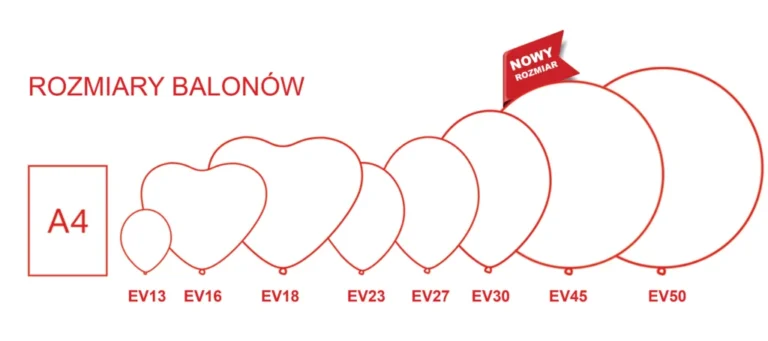
Choose the size according to the task, the participants’ ages and the setting. A small art project may require a different balloon size from a group game or a three-dimensional model. Safety guidelines should be followed regardless of size.
Can balloons be used in language activities?
Yes. Inflated balloons can serve as props for naming colours, following instructions, describing characters or creating stories. However, the balloon itself should not be regarded as a tool for treating speech disorders.
Is a balloon a therapeutic tool?
A balloon itself does not have a specific therapeutic effect. It may be used as a prop in sessions led by a specialist if this suits the session’s objective and the participant’s individual needs.
Are latex balloons suitable for someone with a latex allergy?
Latex balloons are made from natural rubber latex. Anyone with a diagnosed natural latex allergy should avoid contact with products containing this material.
What experiments can you do with balloons?
Balloons can be used to demonstrate a balloon rocket, build a simple air-powered vehicle or form part of a controlled bicarbonate of soda and vinegar experiment. Adapt the experiment to the children’s ages and ensure adult supervision.