Spring Balloon Colours 2026: Pastel Ideas | Everts-Pol
Key information:
- Everts-Pol’s spring colour palette for 2026
- Soft aesthetics – decorations in gentle colours
- Pastel colours in the Everts-Pol range
- How can you use each colour?
- Double stuffing as a way to modify balloon colours
- How to plan a pastel balloon garland
- Suggested pastel palettes from Everts-Pol
- How to choose Everts-Pol balloons for pastel decorations
- How to combine pastel colours in one arrangement
- Frequently asked questions
Everts-Pol’s spring colour palette for 2026
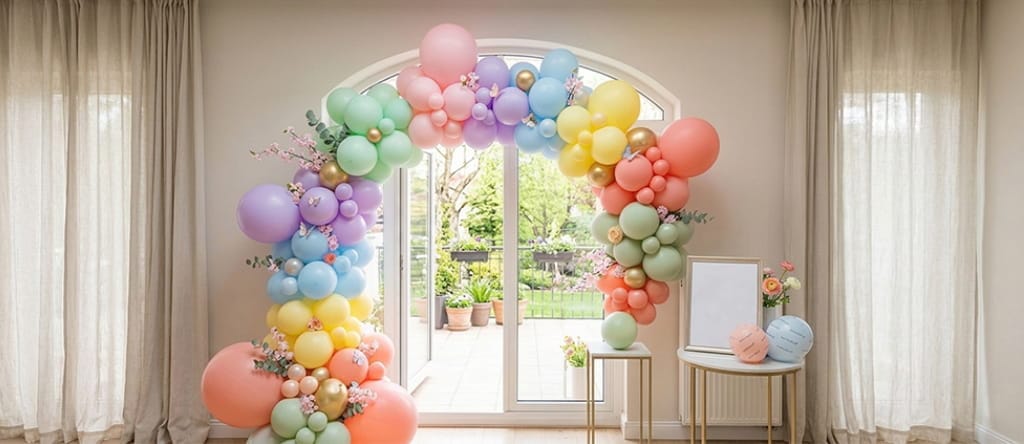
For spring 2026, Everts-Pol suggests palettes based on light, muted colours: pink, light blue, mint, lavender, pale yellow and warm cream shades. These can be used individually or combined in pastel balloon garlands for weddings, baby showers, birthdays, family celebrations and corporate events. In this article, we introduce colours available in the Everts-Pol range and show examples of how to combine them. We also explain how to create a coordinated garland palette and where to use pastel combinations in spring decorations. Before choosing a particular combination, consider not only the colour of each balloon, but also the lighting, background, other decorative elements and balloon sizes used throughout the arrangement.Soft aesthetics – decorations in gentle colours
We use the term soft aesthetics to describe arrangements based on light, gentle colours with subtle contrasts. In our spring 2026 suggestions, these combinations offer an alternative to highly saturated and neon palettes. You can create this style using pale pink, light blue, mint, lavender, pale yellow and cream shades. Combine colours with similar tones or bring warmer and cooler shades together in one arrangement. A pastel colour palette is an aesthetic choice. Neither the colour of a balloon nor the use of natural latex automatically indicates a particular environmental benefit. This article focuses on balloon colours and their use in decorations. Information about standards, testing and documentation for Everts-Pol products is covered in separate articles.Pastel colours in the Everts-Pol range
The Everts-Pol range includes light and pastel colours from the classic range and the Macaron collection. For spring arrangements, you can use:- Pale pink – colour 231 from the Macaron collection.
- Mint – colour 285 from the Macaron collection.
- Light blue – colour 151.
- Lavender – colour 270.
- Pale yellow and cream shades – including colours 010 and 210.
- Soft orange – colour 220 from the Macaron collection.
- Pastel pink – colour 131.
How can you use each colour?
Pale yellow
Pale yellow can provide a warm base colour for a spring palette. We suggest pairing it with pale pink, ecru, light blue or mint. Available shades include colours 010 and 210. You can use this colour throughout a larger part of the garland or as an occasional accent among cooler shades.Pale pink
Pale pink can serve as the main colour or a subtle accent. It works well with cream, pale yellow, lavender and light blue. Everts-Pol options include colour 131 and Macaron pink 231.Light blue
Light blue 151 can add a cooler element to a pastel palette. You can pair it with white, lavender, pale yellow or pink. In a larger arrangement, light blue can work as either the base colour or a complement to warmer pastel tones.Mint, lavender and soft orange
Mint 285 works well in light green and cream palettes. Lavender 270 can be combined with light blue, white and pink, while soft orange 220 can be paired with pale yellow, cream and pink. Before preparing a larger decoration, place a few uninflated balloons next to one another, then check the selected combination again after inflation. The appearance of the colour may change as the surface stretches and under different lighting.Double stuffing as a way to modify balloon colours
The double-stuffing technique involves placing one latex balloon inside another before inflation. The outer layer provides the main visible colour, while the inner layer can modify its final shade. The result depends on the specific colours, their opacity, balloon sizes, inflation level and lighting. Before making the entire decoration, prepare one inflated sample. Not every combination of two colours produces a predictable result. Combinations such as “colour A + colour B = a specific third colour” should therefore not be treated as universal rules without testing them first. Read more about this technique in our separate guide: double-stuffed balloons – what are they and how do you combine balloon colours?How to plan a pastel balloon garland
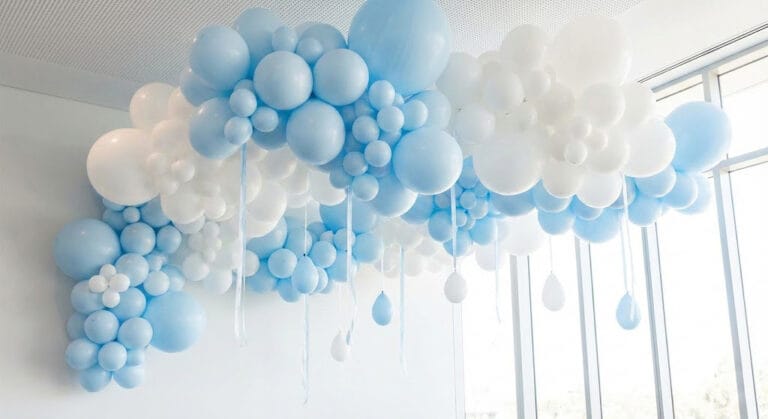
For a pastel garland, choose a base colour first, followed by one or two supporting colours. This approach helps keep the decoration coordinated and allows you to control the proportions of each shade. Vary the balloon sizes to create a less regular arrangement. Larger balloons can provide the main volume of the garland, while smaller ones fill the spaces between the main elements. There is no single correct colour ratio or balloon quantity for every garland. The number required depends on the decoration’s length, density and the balloon sizes used. We explain how to assemble the structure in detail in our guide:Suggested pastel palettes from Everts-Pol
The combinations below are Everts-Pol’s colour suggestions for spring 2026. Use them as a starting point and adapt them to the occasion, venue and other decorative elements.| Palette | Suggested colours | Example uses |
|---|---|---|
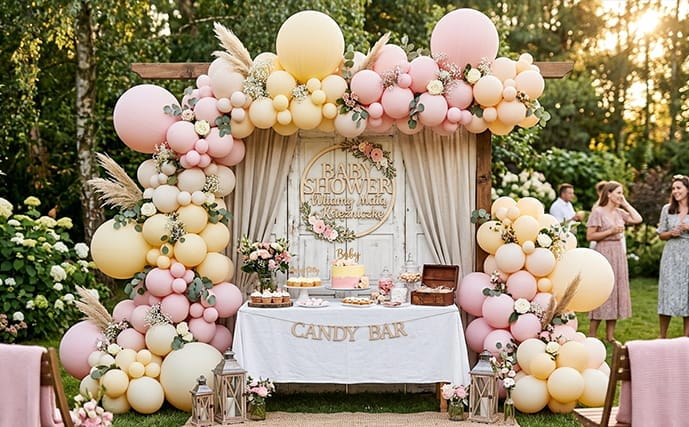
| Spring pink | pink 231 + pale yellow 210 + cream | baby showers, birthdays, family celebrations |
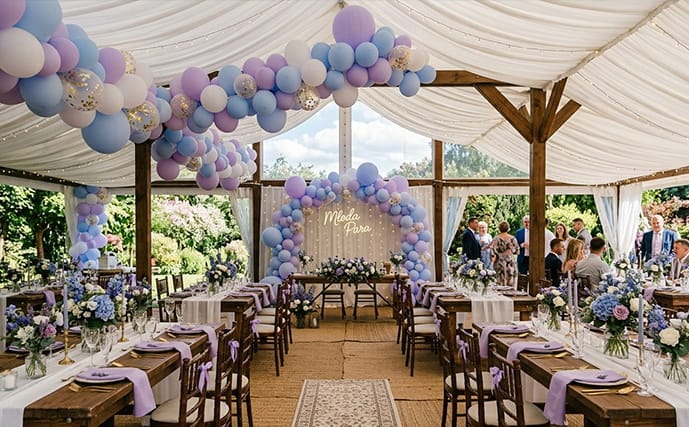
| Lavender blue | light blue 151 + lavender 270 + white | weddings, family celebrations, table decorations |
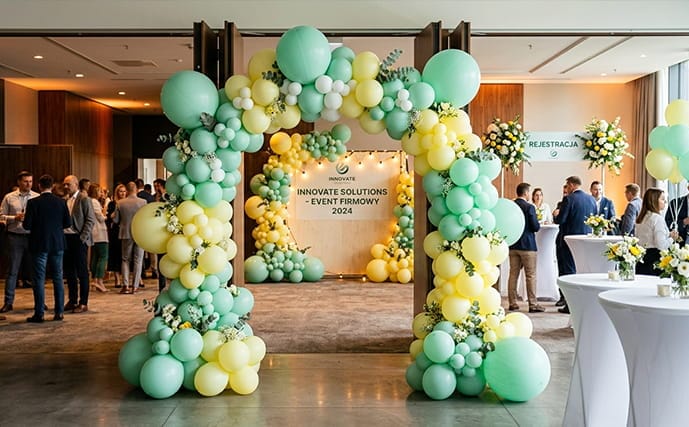
| Mint and cream | mint 285 + light cream 010 + white | corporate events, birthdays, spring arrangements |
How to choose Everts-Pol balloons for pastel decorations
When planning a pastel decoration, focus primarily on the balloon’s colour, size and finish. Everts-Pol offers classic, Macaron, metallic, chrome and transparent balloons. You can combine different sizes in a garland, such as smaller EV13 balloons with larger EV27, EV30 or EV45 balloons. Smaller balloons can act as fillers, while larger ones build volume and create a visual rhythm throughout the arrangement. The exact selection depends on the design and the availability of your chosen colour in a particular size. Before buying a larger quantity, check the variants available for each product. If you have a specific colour combination in mind, prepare a small sample of the decoration before making the complete arrangement.How to combine pastel colours in one arrangement
When creating a pastel palette, pay particular attention to colour temperature, contrast and the proportions of each colour. You can combine several similar shades or pair a warmer colour with a cooler accent.Warm combinations
Pale yellow, pink, cream and soft orange create a warmer palette. This combination can be used for spring family celebrations, birthdays or baby showers.Cooler combinations
Light blue, lavender and mint create a cooler palette. White can serve as a neutral supporting colour, separating individual shades within a larger arrangement.Combining warm and cool colours
Mint can act as a transitional colour between cooler light blue and warmer cream or pale yellow. When using several colours, choose one dominant shade and use the others as supporting colours. For corporate decorations, it is best to match the palette to the brand’s visual identity. The colour of a decoration alone should not be presented as evidence of a company’s environmental credentials.Frequently asked questions
Which pastel colours are available from Everts-Pol?
The range includes pastel shades of pink, light blue, yellow, mint, lavender and orange, including colours from the Macaron collection. Check the individual product for the availability of your chosen colour and size.
Explore the current Everts-Pol latex balloon colours.
Are Everts-Pol balloons suitable for pastel garlands?
Yes. You can use Everts-Pol balloons in various sizes and colours to make garlands. The choice of specific models depends on the planned arrangement and the availability of your chosen colours.
How does the double-stuffing technique work?
Double stuffing involves placing one balloon inside another before inflation. Combining two layers can change the final colour. Test the result on a sample, as it depends on the specific shades, their opacity, balloon sizes and inflation level.
How many balloons do you need for a 3-metre pastel garland?
There is no single quantity that suits every 3-metre garland. The number required depends on balloon sizes, the density of the structure and the number of small balloons used as fillers. We explain the planning process in our dedicated balloon garland guide.
How do you choose three colours for a pastel garland?
The simplest approach is to start with one base colour and choose two supporting colours. You can create a warmer palette, such as pale yellow + pink + cream, or a cooler one, such as light blue + lavender + white.
Are all pastel colours available in the same sizes?
Do not assume that every colour is available in every balloon size. Check the availability of a particular colour and size on the product page or before placing your order.