Balloon Packaging Symbols Explained

What information appears on balloon packaging?
Packaging markings can be divided into several groups:- Product compliance and safety – such as the CE mark and warnings concerning children.
- Instructions for use – such as the balloon pump pictogram.
- Information about the product or packaging material – such as natural rubber latex, PP (5) and LDPE (4).
- Information relating to packaging and waste – such as the Green Dot and Tidyman.
| Marking | What does it mean? | What does it not mean? |
|---|---|---|
| CE | The manufacturer has demonstrated that the product complies with applicable EU requirements. | It is not a quality certificate or a guarantee of safety regardless of how the product is used. |
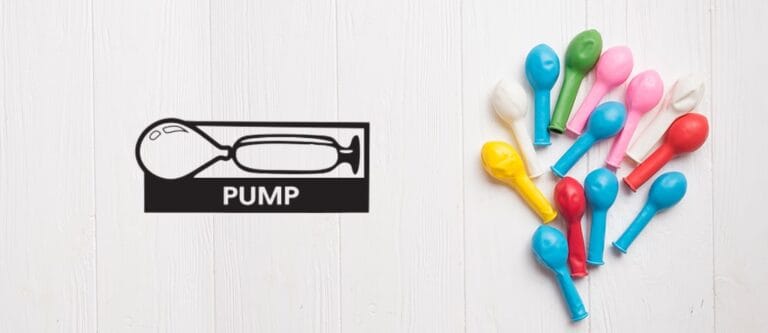
| Pump | Indicates the recommended method of preparing and inflating balloons. | It is not a product quality mark. |
| 0–8 / warning | Highlights the risks associated with uninflated and broken balloons and the need for adult supervision. | It does not mean that every use of an inflated balloon by a child under 8 is prohibited. |
| PP (5) | Identifies polypropylene as the packaging material. | It does not guarantee that the packaging will be recycled. |
| LDPE (4) | Identifies low-density polyethylene as the packaging material. | It does not guarantee that the packaging can be recycled through every local collection system. |
| Green Dot | Relates to financial contributions towards an appropriate packaging waste management scheme. | It does not mean that the packaging is environmentally friendly, made from recycled material or automatically recyclable. |
| Tidyman | Reminds users not to litter and to place waste in an appropriate bin. | It is not a recycling symbol. |
The CE mark – compliance with EU requirements
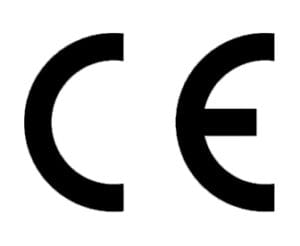
The CE mark indicates that the manufacturer has demonstrated compliance with applicable European Union requirements and takes responsibility for that compliance.
Balloons placed on the market as toys are subject to toy safety requirements. These include product conformity assessment and appropriate warnings and information for users.
CE is not a quality certificate and does not mean that the product will be safe regardless of how it is used. The instructions and warnings on the packaging must still be followed.
Find out exactly what the CE mark on balloon packaging means
The pump symbol – how to inflate balloons
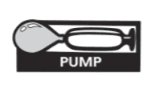
The pump pictogram reminds users of the recommended way to inflate balloons. We recommend using a suitable balloon pump to inflate Everts-Pol balloons, particularly when they are used for games or events involving children.
Using a pump allows you to inflate balloons without putting them in your mouth. Uninflated balloons should be kept out of children’s reach.
Find out why balloon packaging carries a pump symbol
The 0–8 warning – child safety
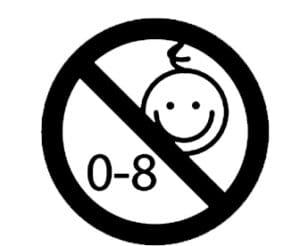
The marking concerning children under 8 primarily highlights the risks associated with uninflated balloons and fragments of broken balloons.
Children under 8 should use balloons under adult supervision. Keep uninflated balloons out of their reach and remove broken balloons and all their fragments immediately.
This marking should not simply be interpreted as “balloons are prohibited for all children under 8”. What matters most is following the warnings on the specific packaging and providing appropriate supervision.
Learn more about the 0–8 warning on balloon packaging
The balloon-at-mouth symbol – an important warning
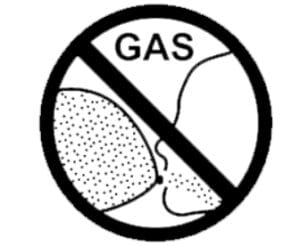
The pictogram showing a balloon near a mouth reminds users not to put balloons in their mouths or use them in ways other than intended.
It is best to inflate balloons using a pump. If a balloon is filled with helium, do not deliberately inhale the gas inside it.
Where children are concerned, it is particularly important to keep uninflated balloons and fragments of broken balloons out of their reach.
Read more about the warning symbol showing a balloon near a mouth
Information about natural rubber latex
The packaging of balloons made from natural rubber latex also includes information about the product material.
Natural rubber latex describes the material used to make the balloon. It is not an environmental label, and the word “natural” does not automatically mean that the finished product is environmentally friendly, biodegradable or compostable.
For more information about the material, see our guide to what latex is and its properties.
Packaging material identification codes – PP (5) and LDPE (4)
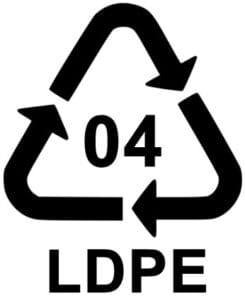
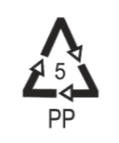
The markings PP (5) and LDPE (4) identify the type of plastic used in the packaging:
- PP (5) – polypropylene.
- LDPE (4) – low-density polyethylene.
These are primarily material identification codes. Knowing the type of plastic can help with correct waste sorting, but the symbol alone does not automatically mean that the packaging will be recycled.
Check how to dispose of the packaging according to your local waste sorting rules.
Find out what PP (5) and LDPE (4) codes mean
What does the Green Dot mean?
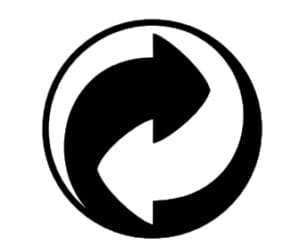
The Green Dot is a symbol associated with funding a packaging waste management scheme. It indicates that a financial contribution has been made for that packaging to the relevant packaging responsibility scheme.
This symbol does not mean that the packaging is environmentally friendly, made from recycled material or guaranteed to be recycled.
The Green Dot should therefore not be treated as an ecolabel or a material identification mark.
Learn more about the meaning of the Green Dot
Tidyman – a reminder to dispose of waste correctly
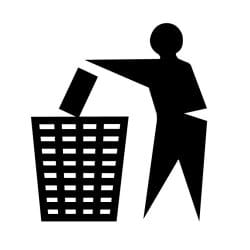
Tidyman shows a person putting waste in a bin. It reminds users not to litter and to place packaging in an appropriate bin after use.
Tidyman is not a recycling symbol and does not identify the material used to make the packaging.
When sorting waste, follow the guidance for the packaging material and your local waste management rules.
Find out what the Tidyman symbol means