Balloon Trends and Inspiration – Creative Decoration Ideas|Blog|Responsible Balloon Use and Environmental Awareness
Latex Balloon Recycling & Disposal Guide
What should you do with a used latex balloon? After a party or event, collect all balloons and balloon fragments and dispose of them according to local waste sorting rules. Balloons should not be released into the environment.
It is also important to remember that the natural origin of latex does not automatically mean that a finished balloon is suitable for home composting, the BIO waste bin or standard plastics recycling. Poland’s waste sorting system does not have a separate nationwide waste stream exclusively for used latex balloons.
Making a decoration from a piece of a used balloon should therefore not automatically be described as latex balloon recycling. It is another way of using the material and does not mean that the balloon has entered an industrial recycling process.
Latex balloon recycling does not mean home composting or making objects from cut-up balloon fragments. Responsible handling starts with collecting all balloons after the event, separating components made from other materials and checking local waste sorting rules.
The natural origin of latex is not sufficient grounds for describing a finished balloon as biodegradable, eco-friendly or compostable. Balloons and their fragments should not be deliberately released into the environment.
What should you do with a used latex balloon?
The most important rule is simple: after use, balloons should be collected rather than left in the surroundings. After a party:- collect whole balloons and all visible fragments of burst balloons,
- remove additional components, such as ribbons, clips, sticks and weights,
- sort the accessories according to the materials they are made from,
- check your local council’s or waste collection provider’s sorting instructions for the balloons themselves.
Does reusing a balloon count as recycling?
Not always. In everyday language, the word “recycling” is sometimes used broadly, but in waste management it refers to a specific process.| Term | What does it mean? |
|---|---|
| Waste prevention | Measures taken before a product becomes waste |
| Reuse | Using a product again for its intended purpose before it becomes waste |
| Preparing for reuse | Checking, cleaning or preparing waste so that it can be used again |
| Recycling | Processing waste into products, materials or substances intended for further use |
| Other recovery or disposal | Other methods of managing waste within the waste management system |
Are latex balloons biodegradable?
The same universal biodegradation properties should not be attributed to all latex balloons. Natural rubber latex is a material of natural origin, but a finished balloon is a product with a specific formulation. Its properties depend on factors including the manufacturing process and the ingredients used. The rate and extent of degradation of a finished product may vary depending on:- the balloon’s specific formulation,
- environmental conditions,
- temperature,
- exposure to light and oxygen,
- moisture,
- the presence of microorganisms,
- the method used to assess degradation.
Can latex balloons be composted?
We do not recommend putting used latex balloons in a home compost bin or automatically placing them in the BIO waste bin. The brown BIO waste stream in Poland’s separate waste collection system is primarily intended for certain kitchen and plant waste, such as:- fruit and vegetable scraps,
- food leftovers,
- leaves and flowers,
- grass,
- branches,
- sawdust, bark and untreated wood.
Which bin should latex balloons go in?
Poland’s Unified Waste Sorting System covers paper, glass, metals and plastics, BIO waste and mixed waste. It does not include a separate nationwide waste stream labelled “latex balloons”.Should latex balloons go in the BIO waste bin?
Do not assume that they should. Finished latex balloons are not included in the basic list of waste intended for the brown BIO bin. The natural origin of latex alone does not determine the correct waste stream.Should latex balloons go in the yellow bin?
Here, too, the fact that a balloon is made from a flexible material should not be the sole deciding factor. The yellow waste stream is primarily used to collect metals and plastics according to local system rules. Natural rubber latex is not the same material as the typical plastics collected in the yellow bin.What if local rules do not specify a separate waste stream?
Check the sorting instructions provided by your local council or waste collection provider. If an item does not qualify for any of the locally collected separate waste streams, the rules for residual or mixed waste may apply. If you are unsure, local instructions are a more appropriate source than general advice found online, as detailed requirements may differ between waste collection systems.5 rules for handling balloons after a party
1. Collect all balloons and their fragments
After the event, check not only the main decoration but also the floor, the areas around tables, the stage, the entrance and any places where balloons may have burst. Balloon fragments should not be left within children’s reach or allowed to enter the environment.2. Do not release balloons
Balloons should not be deliberately released into the atmosphere. This applies to latex balloons and other types of balloons alike. After use, collect them together with the components used to secure them.3. Separate additional decoration components
A balloon may be attached to components made from other materials, such as:- a ribbon,
- a balloon stick,
- a clip,
- fishing line,
- a balloon weight,
- part of a decorative structure.
4. Do not assume that natural latex belongs in BIO waste
The material information describes the raw material used to manufacture the balloon. It does not automatically identify the correct waste bin or mean that the finished product can be composted.5. Check local waste sorting rules
If you do not know where a particular item belongs, check the waste search tool or sorting instructions provided by your local council or waste collection company.Why should balloons not be released?
A balloon released into the air eventually returns to land or water. Ribbons and other decorative components may enter the environment along with it. The appropriate way to finish an event is therefore to collect the balloons and other decoration components, rather than deliberately releasing them. The European Balloon & Party Council (EBPC), an organisation representing the European balloon and party products industry, also promotes the “Don’t let go” message: do not release balloons.What should you do with a burst balloon and its fragments?
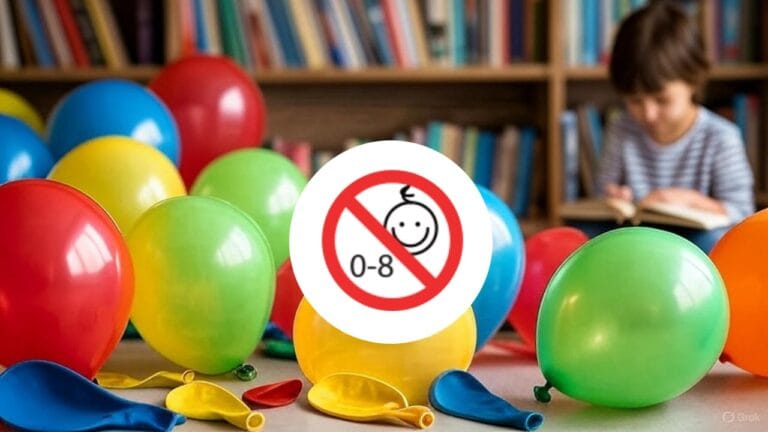
Collect a burst balloon immediately, together with all visible fragments. This is particularly important in places where children are present. Uninflated balloons and fragments of burst balloons should be kept out of reach of children under eight, as they can pose a choking or suffocation hazard. We do not recommend using balloon fragments for sensory play, crafts intended for young children or other activities where the pieces could be put in the mouth. For more information about symbols and warnings, see our guide to what the symbols on latex balloon packaging mean.What should you do with large quantities of balloons after an event?
For conferences, galas, trade shows, corporate events and other larger projects, plan how the decorations will be handled before the event begins. The organiser can establish in advance:- who is responsible for dismantling the decorations,
- who will collect burst and used balloons,
- where waste will be collected after dismantling,
- how ribbons, weights and other components made from different materials will be separated,
- which waste sorting rules apply at the venue or through its waste collection provider.
Natural latex: what does this information actually mean?
Everts-Pol balloons are made from natural rubber latex. This describes the material used to manufacture the product. However, it should not automatically lead to the conclusion that the finished balloon:- is “eco-friendly”,
- is “environmentally friendly”,
- can be placed in the BIO waste bin,
- is suitable for home composting,
- breaks down within a specific, consistent timeframe,
- has a lower environmental impact than every product made from another material.
Latex balloon recycling: key points
| Question | Short answer |
|---|---|
| Should a used balloon be left in the environment? | No. Collect balloons and their fragments after use. |
| Is every latex balloon biodegradable? | This general claim should not be made without data relating to the specific product. |
| Do balloons belong in the BIO waste bin? | Not automatically. Follow local waste sorting rules. |
| Do balloons belong in the yellow bin? | Do not assume so. Natural latex is not the same as the typical plastics collected in this waste stream. |
| Can balloons be composted? | We do not recommend home composting without verified instructions for the specific product. |
| Is releasing balloons an appropriate way to dispose of them? | No. Balloons should be collected after the event. |
FAQ – latex balloon recycling and waste sorting
Which bin should a used latex balloon go in?
Used balloons should be disposed of according to the sorting rules set by your local council or waste collection provider. Poland does not have a separate nationwide waste stream exclusively for latex balloons. Do not automatically place them in the BIO waste bin or the yellow bin.
Are latex balloons biodegradable?
The same biodegradation properties should not be attributed to all latex balloons. The behaviour of a finished product depends on factors including its formulation and environmental conditions. A biodegradability claim should be supported by appropriate data relating to the specific product and defined conditions.
Can latex balloons go in the BIO waste bin?
Do not assume that they can. The brown BIO waste stream is primarily intended for certain kitchen and plant waste. The natural origin of latex alone does not mean that a finished balloon belongs in this waste stream.
Can latex balloons go in the yellow bin?
Do not assume that a latex balloon belongs in the yellow waste stream simply because it is made from a flexible material. Natural rubber latex is not the same as typical plastics. Check local waste collection rules to find the appropriate disposal method.
Can latex balloons be composted?
We do not recommend placing used balloons in a home compost bin or BIO waste bin without verified, product-specific instructions for this disposal method. Natural latex does not automatically mean that the finished balloon is compostable.
How long does a latex balloon take to break down?
There is no single universal timeframe that applies to all latex balloons. The rate and extent of degradation depend on the product’s formulation, environmental conditions and the test method used. Without data for the specific product, timeframes such as a few months or two years should not be stated.
Does natural latex mean that a balloon is eco-friendly?
No. Information about the natural origin of latex describes the material used in manufacturing, but does not by itself determine the finished product’s overall environmental impact. Such a claim would require data relating to the specific product and the environmental characteristic being assessed.
What should you do with a burst balloon?
Collect the burst balloon and all its fragments immediately. Uninflated and burst balloons must be kept out of reach of children under eight. Fragments should not be left in the surroundings or used for activities involving young children.
Can balloons be released after a party?
Balloons should not be deliberately released into the atmosphere. After the event, collect them together with ribbons and other decoration components, then dispose of them according to local rules.