Paper Sticks and Cups for Balloons: A Guide | Everts-Pol
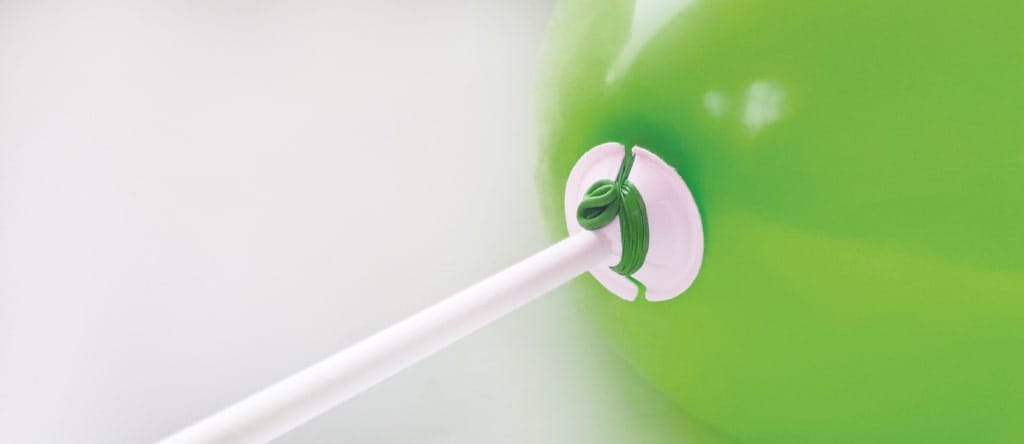
A paper stick with a cup supports an air-filled balloon without the need for helium. Everts-Pol offers paper sticks and cups for balloons: the sticks measure 35 cm in length and the cups measure 3.5 cm in height. They are sold in packs of 100.
This solution can be used for promotional campaigns, parties, trade shows, openings, corporate events and other occasions where a balloon needs to be held or displayed on a stick.
See the current product offering on our paper sticks and cups for balloons – pack of 100 page.
What are paper sticks and cups for balloons?
The set consists of two components:- a paper stick, which serves as a handle,
- a paper cup, which holds the balloon.
Dimensions and basic specifications
| Specification | Details |
|---|---|
| Product type | Paper sticks and cups for balloons |
| Stick length | 35 cm |
| Cup height | 3.5 cm |
| Pack quantity | 100 |
| Balloon filling | Air |
| Primary use | Supporting a balloon without helium |
Why are plastic sticks for balloons covered by SUP legislation?
Single-use plastic sticks intended to support and hold balloons are covered by Directive (EU) 2019/904, commonly known as the SUP (Single-Use Plastics) Directive. SUP legislation restricts the placing on the market of certain single-use plastic products. The products listed in the directive include plastic sticks for balloons and their attachment mechanisms. In Poland, the provisions prohibiting the placing on the market of products covered by this restriction have applied since 24 May 2023. For more information about SUP legislation, visit the website of the Polish Ministry of Climate and Environment.Does the SUP ban apply to all plastic sticks for balloons?
The directive applies to a specific category of single-use plastic products intended to support and hold balloons. It also provides an exception for sticks used with balloons intended for industrial or professional applications that are not distributed to consumers. When assessing a particular product, its material, intended use and the way it is placed on the market must therefore be taken into account. A paper stick for balloons uses a different material from a plastic stick covered by these restrictions.How to attach a balloon to a paper stick
Attaching a balloon to a stick is straightforward, but it should be done carefully to ensure that the balloon is securely held.- Inflate the balloon with air. There is no need for helium, as the stick will support the balloon.
- Secure the balloon neck. After inflating the balloon, close it properly by tying a knot in the neck.
- Place the balloon in the paper cup. Position the balloon neck in the cup’s holder so that the balloon is securely attached.
- Connect the cup to the stick. Once the balloon is correctly secured, fit the cup onto the paper stick.
- Check stability. Before handing the balloon to the user, check that the cup and stick are properly connected and that the balloon does not slip out of the holder.
Does a balloon on a paper stick need helium?
No. One of the main purposes of a stick is to display a balloon filled with ordinary air. The balloon does not need to float by itself, as the stick and cup hold it in position. This solution can be useful wherever a single balloon on a handle is needed, such as during a promotional campaign, trade show or event, or as a table decoration.Where are balloons on sticks used?
Sticks and cups for balloons are primarily intended for situations where an air-filled balloon needs to be easy to hold or used as an individual decorative element. They can be used for:- promotional campaigns,
- venue and retail store openings,
- trade shows and industry events,
- corporate events,
- community festivals,
- birthdays and other parties,
- table or stand decorations.
How to choose sticks and cups for balloons
When choosing a set, check that the cup securely holds the neck of the selected balloon and that the entire assembly remains stable once the balloon is inflated. Do not assume that one holder is suitable for every balloon size and shape. For large or unusually shaped balloons, check compatibility with the specific cup and stick in advance. If you are unsure whether a set is suitable for your chosen balloon model, contact Everts-Pol before placing a larger order.How to store paper sticks and cups for balloons
Store paper accessories in a dry place, protected from moisture, dirt and accidental crushing. It is best to leave them in their packaging until you are ready to prepare the decorations or promotional campaign. Before use, check that the sticks and cups have not been deformed or damaged during transport and storage.What should you check before buying?
Before choosing paper sticks and cups for balloons, establish:- which balloon model and size will be used,
- how many are needed,
- whether the balloons will be handed out to attendees or used as decorations,
- whether the cup is suitable for the selected balloon,
- how the sticks will be stored before the event.
FAQ – frequently asked questions
How long are Everts-Pol paper sticks for balloons?
The paper stick is 35 cm long. The paper cup used to hold the balloon is 3.5 cm high.
How many paper sticks are included in a pack?
The set available from Everts-Pol contains 100 paper sticks and matching cups for balloons.
Does a balloon on a paper stick need to be filled with helium?
No. A balloon on a stick is filled with air. The stick supports the balloon, so it does not need to float by itself.
How do you attach a balloon to a paper stick?
First, inflate the balloon with air and secure its neck. Then position the neck in the paper cup and connect the cup to the stick. Check the stability of the complete assembly before use.
Are plastic sticks for balloons covered by SUP legislation?
Yes. Single-use plastic sticks intended to support and hold balloons are listed in Directive (EU) 2019/904 concerning single-use plastic products. However, the legislation includes a specific exception for industrial and professional applications where the balloons are not distributed to consumers.
Are paper sticks and cups for balloons biodegradable or compostable?
Such properties should only be claimed on the basis of appropriate data relating to the specific product and defined test conditions. The fact that a stick or cup is made from paper is not sufficient grounds for describing the entire product as biodegradable or compostable.
Does a paper stick fit every balloon?
Compatibility with every balloon size and shape should not be assumed. For large or unusually shaped balloons, check in advance that the cup holds the balloon securely and that the entire assembly remains stable.
Where can I buy Everts-Pol paper sticks and cups for balloons?
You can order paper sticks and cups for balloons from the Everts-Pol online shop or contact us about placing an order.